Showing posts with label Homeschool Help Series. Show all posts
Read alouds are the highlight of our homeschool. My favorite part of the day...It's the idealistic vision of homeschooling that may or may not (mostly not) be reality depending on the day. It's the cuddle up on the couch and enjoy your kids part of the day that I absolutely love and don't spend enough time doing.

I asked my eight year old to give me her 6 favorite read alouds from the last few years and here is her list. I have to say, she did pretty well! I would love to add more, but if we are sticking to six, this is a great list!


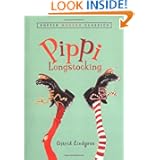
1. Pippi Longstocking


2. Frindle


3. Little House on the Prairie/Little House in the Big Woods


4. Tale of Despereaux


5. Mr. Popper's Penguins


6. Because of Winn Dixie


There have been so many other great books-- Understood Betsy, My Father's Dragon, Sarah Plain and Tall, 100 Dresses...

Read alouds are definitely the heart of our homeschool. Creating precious memories with my kids while exploring the wonderful world between the pages. I look forward to the many more ahead.

Check out the other Homeschool Help Series bloggers' 
favorite read alouds!

Our Top 6 Read Alouds

by on 6:00 AM
Read alouds are the highlight of our homeschool. My favorite part of the day...It's the idealistic vision of homeschooling that may or m...
Sometimes I look longingly at those who homeschool year round. They have a routine and stick with it. I hear you can accomplish so much more, and there is no months long break to forget everything you worked so hard to teach them. Breaks every 6 or so weeks... more time for rabbit trails and project based learning...sounds delightful!

Except, that I could never do it.

Sigh. Maybe I am too lazy to school year round, but I think I look forward to summer break as much if not more than my kids do!

Many homeschool moms struggle with the balance between homeschool mom and just "mom." Summer is a long stretch of time where I am just "mom." Summer brings long days at the pool, discount movies, free bowling, all those read alouds we didn't get to during the school year...I love summer!

While I love the long lazy days of summer, I also know how hard my kids work all year and have no desire for them to lose all that we have worked so hard for all year. While year round schooling is not for us, we have found a bit of a compromise. I don't feel the need to introduce new material, or make great progress in June and July, but I do aim to "tread water" and not lose ground, particularly in math and reading.

We finish our school year in May-- finish out the curriculum we have been using, attend homeschool convention, finish planning the following year, and then take a couple weeks completely off--nothing but movies, playing, and swimming.

After a few weeks, we begin "summer schedule." I like to keep their math and reading skills up to speed so that we don't spend a ton of time having to go backwards in the fall.

I have tons of books on the shelf and they choose to their hearts content. Reading is all that matters-- not what.

Math Mammoth came out with grade review books last summer which are perfect for this purpose. We didn't complete all of it, but we did plenty of review to keep up with their skills.

One of my favorite parts of our "summer school schedule" is all the read alouds we get to. We can read all of those great books we didn't get to during the year, or that didn't fit into the topics we were studying. We love read alouds, and summer gets to be a free for all in this area.

Summer also provides a time for me to regroup for the following year. I usually have all of my materials at least ordered by May/June so that I can make lesson plans, copies, and get everything organized for August. I tend to do a lot of prep work in the summer to make the year go more smoothly.

Each weekend my husband and I put effort into getting our house ready for the next week-- cleaning, laundry, school prep...we call it "repair and prepare," giving us rest from a busy week, as well as a good foundation for the following week. Summer is like a 6 week long repair and prepare for our family. It helps me and the kids reboot, remember why we like each other, and be recharged to embrace completely the challenges of the next grade.

I hope one day my kids will have wonderful memories of summertime...I know I am enjoying making those memories!

Don't forget to check out what the other Homeschool Help Series bloggers have to say about year round schooling!


Summer: Repair and Prepare

by on 6:00 AM
Sometimes I look longingly at those who homeschool year round. They have a routine and stick with it. I hear you can accomplish so much more...
There are some families that always knew they would homeschool, and they have years to prepare...and then you have everyone else -- who finds themselves homeschooling for a myriad of reasons, and yet not an idea of what to do.

So you have pulled your kids out of school. Now what?

First, let's talk about what NOT to do. 

DON'T buy a ton of expensive curriculum.

So often new homeschoolers spend a ton of money on a mountain of shiny new curricula that never gets used. The day they come home from school is not the time to start all that fancy new stuff anyway, so take your time deciding, and buy slowly! Less is definitely more.

DON'T assume you need a box, correspondence, or a virtual school to be successful.

The highest rate of homeschool burnout comes from those families that think they must do the box, or the virtual school. These options do work for some families, and that's great, but don't assume  you are one just because you feel overwhelmed. Decide why you are homeschooling, and what you want, and find something that meets your needs. Trying to fit your family into a box it wasn't made for can be frustrating. There is nothing like a family looking forward to the flexibilty of homeschooling only to find themselves tied down to a virtual school calendar that has little to no flexibility.

DON'T panic. 
You are going to be ok. Many people have done this very thing, and they all felt the exact same way -- excited, nervous, and often inadequate. Be excited...don't panic. Transitioning to homeschooling can be intimidating, but it doesn't need to be paralyzing. There are great resources out there, but the moment those resources cause you to question and doubt...turn off the computer. 

So now that we have established what NOT to do...what SHOULD we do?

DO spend some time de-schooling. 

Don't go in thinking homeschooling will look just like your child's school classroom. It won't. It shouldn't. Homeschooling is new, and especially if you pulled your kids out of brick and  mortar school, they will need to be de-institutionalized in the area of education. Spend some time on the couch reading books, finding and researching areas of interests. Classrooms have a tendency to kill the joy of learning...try to get it back if that's the case. Read, research, read some more, cuddle on the couch, go to the library, talk, get to know your kids, read aloud as a family, let your kids get to know each other more deeply. Get them thinking that learning can be fun...that it's an experience -- not a task to be checked off. 

DO build relationships with your children

If they have been in school outside of the home, chances are your time and interaction with them will now be completely different. You need to get to know them in a different way, and they you. Take time to talk...take time to listen. Show you care about THEM, not just their education. 

DO learn about their learning styles and your teaching styles. 

Remember all that expensive curriculum you didn't buy? Get to know your kids learning styles. Research curriculum that will match their needs. And yes, your teaching style is important. You need to like it or you won't do it. Don't let yourself be overwhelmed. It CAN be overwhelming. Take your time! 

Homeschooling is an exciting adventure, but it can be overwhelming. Remember, it's a marathon not a sprint. Relax, and enjoy the journey! 


Don't forget to check out what the other Homeschool Help Series is 
blogging about their top 3 suggestions for someone who pulled 
a child out of school mid year.

Bernadette -- Switching Midstream

Transitioning to Homeschooling

by on 6:00 AM
There are some families that always knew they would homeschool, and they have years to prepare...and then you have everyone else -- who find...
The best way for a child to learn a language is through immersion. Wonderful, but we don't all have that ability or live in a foreign country, so what now? Well, see that's the problem in our home. We DO have the ability, and yet we just haven't done a good job of it.

When my oldest was born, we did a great job. So great that by age two her Spanish was better than her English, and that left her English speaking grandparents a little perturbed. When E was born we implemented the Spanish in the morning, English in the afternoon and evening approach. It was great.

At 12 months when we moved to Ecuador for a a stint, her transition was easy-- she was already completely bilingual. Well, with a Spanish speaking nanny in the mornings and spending the afternoons with us at a children's home-- speaking Spanish-- she only got English from dinner on. After a year when we returned to the States, we realized that she understood significantly more Spanish that English and only spoke a few words like ma-ma, da-da, and agua. We completely overcompensated. We began to speak English only to get her acclimated and now six years later, it is one of my biggest regrets with all of our kids.

Often I think about how to "fix" it. Take a summer and only speak Spanish? Spanish only in the afternoons? 2-3 hour daily time blocks? I have contemplated it often, but unfortunately not done much to ensure fluency in my kids.

While I have regrets about this, and while I have yet to buckle down and work towards bilingual status with them, we have taken a fun basic immersion style approach to Spanish that is doing a great job of introducing the language and allowing the kids to have fun with it.


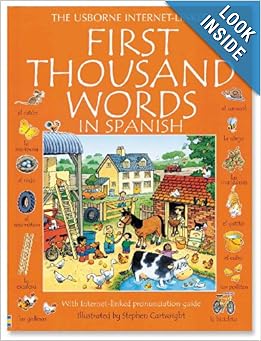
We started last year using a spine of the First Thousand Words in Spanish, and while we haven't been as diligent as I would like with it, they are learning and we are progressing slowly. Last year we participated in a Spanish immersion co-op that was so much fun, and I will probably do that again sometime in the future!

I began creating a curriculum for our Spanish studies, but we have camped out in the first few units, going a lot slower than I intended. I will get around to finishing some day!

Here is a glimpse into our approach.

1. Basic Immersion


The best way for children to learn language is to be immersed in it, even if you only speak a little of a language, you can use what you know to immerse your child. Choose a theme or set of vocabulary and replace those words for they English words in every day speech. We base vocabulary off of the Usborne's First Thousand Words book. Each two page spread covers a different theme or room of the house. We take each room for a few weeks or even a month or more, and replace the Spanish vocabulary for the English words. For example, if your theme is "The Kitchen" you might ask your child to get a cup of agua from la cocina. As you add vocabulary, try to hold on to as much as the older words as you can. It can be a lot of fun, and kids learn so much this way!

2. Immersion Games


My kids love games! And I know they are not alone. Simple games like Pictionary, BINGO, charades, or memory make great practice for foreign language. My kids loving playing basic card games and UNO completely in Spanish. How Tall Am I? Is a great one to practice clothing vocabulary. Or "Spot it" has all kinds of great vocabulary to play with!

It only requires a few sentences of the foreign language to set the stage for the game, and then whatever vocabulary you are working on. Write out those sentences for your older kids to have a "cheat sheet" and just play often!

My children learned the parts of the body by playing "Simon Dice" (Simon Says). "I Spy with my little eye" becomes "Yo veo con mi ojito." Often while driving down the road my kids will start playing I spy...in Spanish. It's a great way to learn and practice the color words! Go Fish cards can be made for any vocabulary from numbers or colors to members of the family. UNO works great for practicing colors and numbers. Just be sure as the parent/teacher you are engaged and interacting with them requiring them to use the language. There are so many ways to engage children with foreign language, the important part is remembering, they are learning when they are having fun!

3. Music


My kids will learn anything if you put it to a song. Last year I found the Sara Jordan Bilingual Songs and my kids were hooked! I am amazed at how much vocabulary they have learned from these! We tie in what we are learning from the First Thousand Words book and often listen to the CD in the car and play games using the vocabulary at home.


Don't forget to check out what the other Homeschool Help Series bloggers have to say about Foreign Language!


Fun with Foreign Language

by on 6:00 AM
The best way for a child to learn a language is through immersion. Wonderful, but we don't all have that ability or live in a foreign co...
It's kind of a joke around our house, when my husband is asked about his role in homeschooling, he always responds jokingly: I fund it. The deeper more truthful response is my husband plays a great role in homeschooling, it's just more of the silent, behind the scenes role. It is vital nonetheless.


With a busy work schedule, we don't co-teach and as much as I would love him to take over something like science or math, that isn't realistic for us. Although he doesn't take a direct teaching role, his role is crucial.  He also does play the educator role in areas outside of the confines of our "school day." So, I ventured out and asked my husband, what do you see as your role in our homeschool? A few of the behind the scenes jobs my husband recognized as his are:


--Financier 
It may be a joke, but it's true nonetheless! I am well aware that you can homeschool for free or cheap, but the truth is, we don't. Our curriculum is expensive. I am a book addict and am working diligently to make my children suffer the same fate-- generational addictions, right???  We enjoy children's museums, zoos, aquariums, and real life opportunities to learn. It adds up, and my husband is amazingly supportive.

--Emotional Support
Homeschooling was his idea. Yes, I bought in quickly and we both believe that we are called to this, but ultimately I could not ask him to be more supportive of this endeavor. From being the major support and encourager of homeschooling in our family, to being the ear on the other side of the phone as I occasionally cry and whine about my rough morning or how one of the kids forgot how to read or add. He is my rock, and we couldn't do this without his support.

--Tech Support
This is no joke. In our home, we adhere to the serious stereotypes of the techy guy and the tech needy girl. I'm not tech clueless, but when I wanted to stream our science CD from the laptop to the TV wirelessly it was just way easier to ask him to set it up for us!

--Camping/outdoor coordinator (ie. nature studies)
My husband is from the country...grew up on a cattle farm. We live in a subdivision in the city. Yeah, it doesn't take much deduction to understand that my country boy goes through withdrawal often and drags his family camping. (ok ok, he only drags me . . . the children run happily along!) He takes them fishing, kayaking, hiking, and teaches them about all the many things this city girl just falls short of.

--Shop instructor
He's the project man. The kids are well informed of the many tools in the garage and how to use them. This fills a real need as these are real life needs.

--Requisitor of supplies
I always do all of my planning in the summer-- not necessarily which math pages we will do each day, but I do all my printing, filing, and organizing in the summer. This helps assure those great ideas actually get done. My husband takes that grandiose list and buys all the supplies. Many in the summer, many whenever I send an SOS text about that plaster we need tomorrow! This is a great help.

A few I would add...

--Domestic Support:
OK, so maybe no guy wants to have the title of domestic support, but goodness, I couldn't keep up without his help! I rarely fold laundry. I hardly ever mop or vacuum. I never change sheets. So maybe this isn't directly related to "homeschooling," but he does these things so I can do what I do-- teach the kids.

--Breakfast Chef
Almost every day my amazing husband gets the kids breakfast. It may seem small, but it is huge for me! He often works late and dinner is often without him, so having one meal of the day not on me is a huge help. It also allows me a little extra time in the morning for important tasks like sleeping and morning devotions.


So basically, yes. He is our silent philanthropist-- offering his unwavering support of homeschooling, and doing all he can to support us in this amazing but often chaotic adventure. We are so grateful for his role in our homeschool.

The dad's role is different in every house. Check out the other Homeschool Help Series bloggers as they share the role of homeschool dad at their house!


Related Posts Plugin for WordPress, Blogger...